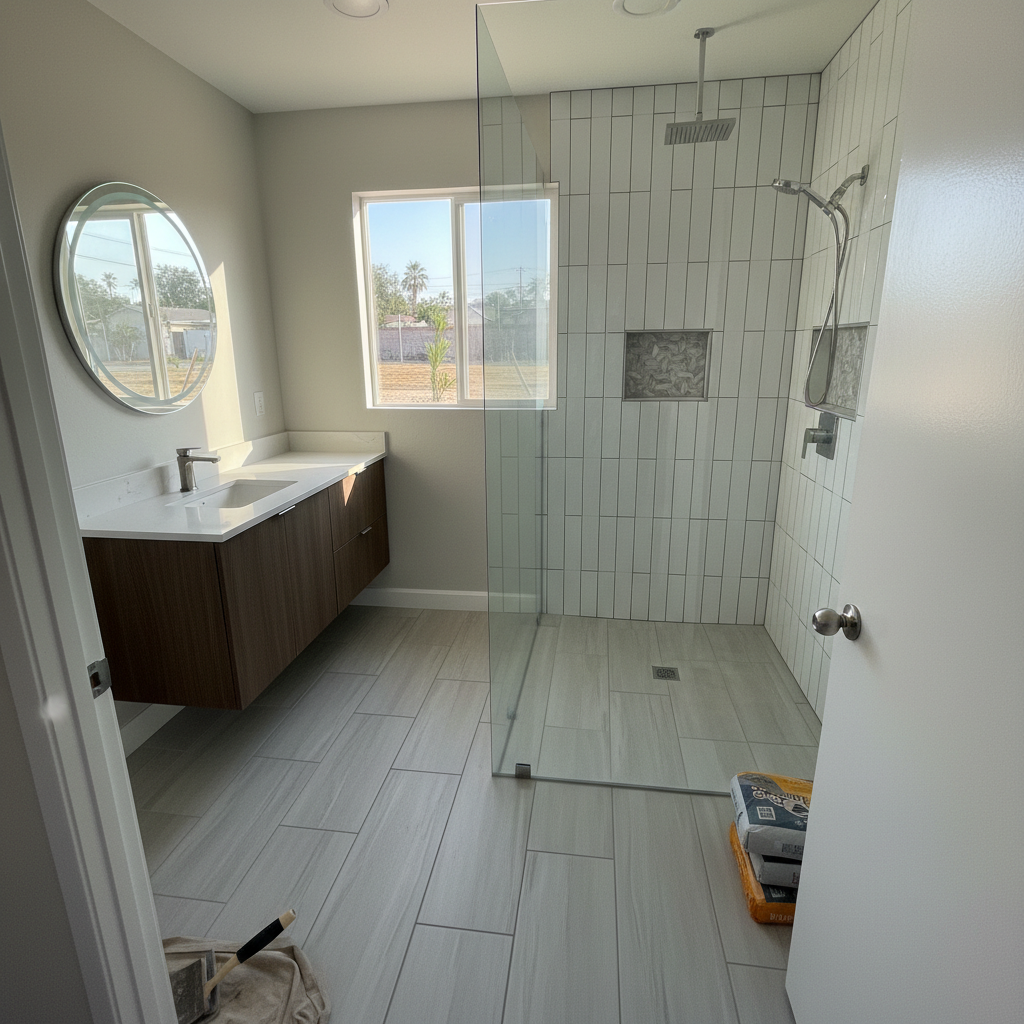
Alright, let's talk about flooring costs. Everyone wants a fresh look, but nobody wants to overpay. I get it. As someone who's been putting in floors and renovating bathrooms all over Bell Gardens for years, I've seen it all – good jobs, bad jobs, and prices that make your head spin. So, what's the real story when it comes to tile and other flooring installations?
What Makes Flooring Prices Go Up or Down?
It's not just about the square footage, though that's definitely a big piece of the puzzle. A few key things really move the numbers around:
- Material Choice: This is probably the biggest factor. Ceramic tile usually costs less than, say, a high-end porcelain or a natural stone like travertine. LVP (Luxury Vinyl Plank) is popular and often cheaper than solid hardwood. Want real wood? Expect to pay more.
- Subfloor Condition: This is super important and people often miss it. If your existing subfloor is bumpy, damaged, or needs a lot of prep work – like leveling compounds or new plywood – that means extra labor and materials. We see a lot of older homes here in Bell Gardens, especially those built in the 50s and 60s, where the subfloors have settled or gotten wet over the years. Ignoring this means your new floor just won't hold up.
- Installation Complexity: A simple, straight lay of large tiles is quicker and cheaper than a complicated pattern like herringbone or diagonal. Cutting around lots of corners, doorways, or installing in small, oddly shaped bathrooms also adds to the time it takes.
- Demolition & Disposal: Ripping out old tile, carpet, or hardwood takes time and effort. Plus, we have to pay to get rid of that waste correctly. If you've got multiple layers of old flooring, well, that's even more work.
- Project Size: Sometimes, bigger projects can snag a slightly better per-square-foot rate on labor because of what we call "economies of scale." But a tiny powder room might actually have a higher per-square-foot cost due to all the detailed cuts and tight spaces. Go figure.
Typical Cost Ranges in Bell Gardens
I'm going to give you some realistic ranges for installed prices, and yes, that includes both materials and labor. Remember, these are averages, and your specific project might be higher or lower.
- Ceramic Tile: For standard 12x24 or 18x18 ceramic, you're generally looking at $8 - $15 per square foot. This includes a decent quality tile (let's say $2-$5/sq ft) and professional installation. If you pick a fancy mosaic or smaller, intricate tiles, that labor cost can really jump.
- Porcelain Tile: A step up from ceramic, porcelain is denser and more durable. Expect $10 - $20+ per square foot installed. High-end porcelain can easily push past $25/sq ft.
- Luxury Vinyl Plank (LVP): This is a solid option for durability and water resistance, especially in kitchens and bathrooms. Installed, you're typically in the $7 - $14 per square foot range. The material itself can vary wildly, from $2/sq ft for basic click-lock to $6+/sq ft for premium, thicker planks.
- Laminate Flooring: A more budget-friendly choice than LVP, though it's not as water-resistant. You'll usually see $6 - $10 per square foot installed.
- Engineered Hardwood: Offers the look of solid hardwood but with more stability. Expect $12 - $25+ per square foot installed. The material cost here is a big factor.
- Solid Hardwood: The classic choice, but also the most expensive. Installation is more involved, too. You're looking at $15 - $30+ per square foot.
These numbers assume a pretty straightforward installation on a decent subfloor. If we're talking about extensive subfloor repair, custom patterns, or moving plumbing fixtures, those costs will be added on top, naturally.
What Should a Quote Include?
When you get a quote from Bell Gardens Bathroom Company or any reputable contractor, it should be clear and detailed. Here's what you want to see:
- Material Cost: Itemized by type of flooring, grout, thinset, transition strips, and any other necessary supplies.
- Labor Cost: Clearly stated, often as a per-square-foot rate or a total for the project.
- Subfloor Preparation: Any leveling, patching, or new subfloor materials needed. This should be explicitly listed.
- Demolition & Disposal: Cost for removing old flooring and hauling it away.
- Permits (if applicable): For major structural changes, though usually not for just flooring.
- Timeline: An estimated start and completion date.
- Payment Schedule: How and when payments are due.
Always get it in writing. Don't settle for a handshake deal, no matter how friendly the contractor seems.
How to Avoid Overpaying
My best advice? Get at least three detailed quotes. Don't just go with the cheapest one without understanding *why* it's cheap. Sometimes, a low bid means they're cutting corners on materials, skipping subfloor prep, or using inexperienced labor. You don't want that.
Ask questions. A good contractor will be happy to explain their process and justify their pricing. Understand what's included and what's not. If a quote seems too good to be true, it probably is. You're investing in your home, and a properly installed floor will last for decades, adding value and comfort. A poorly installed one will be a headache and cost you more in the long run.